
In Category on 19 Oct 2026
How Greece built its national data portal on CKAN
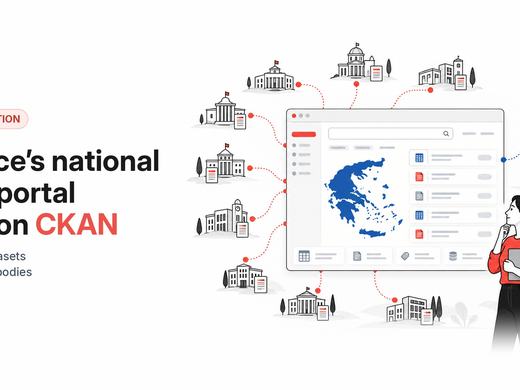
data.gov.gr now holds 22,000+ datasets from 510+ public bodies, with DCAT-AP metadata, quality scores and harvesting into data.europa.eu
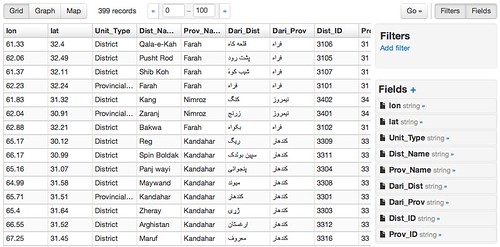 A preview of data from the DataStore in recline.[/caption]
The new version of the DataStore uses a full database for your data, unlike the old version which simply indexed it in a search engine. This means there is now a much more powerful machine interface (API) to the data (see below). For example, you can choose to update or add data points individually, rather than re-uploading an entire file.
An important improvement in searching is that queries can connect different resources together - greatly extending the possibilities for using your data, especially if you have used standard names (or Linked Data URIs) to identify the subjects of your data. For example, suppose you have some data indexed by country, using standard ISO country codes(
A preview of data from the DataStore in recline.[/caption]
The new version of the DataStore uses a full database for your data, unlike the old version which simply indexed it in a search engine. This means there is now a much more powerful machine interface (API) to the data (see below). For example, you can choose to update or add data points individually, rather than re-uploading an entire file.
An important improvement in searching is that queries can connect different resources together - greatly extending the possibilities for using your data, especially if you have used standard names (or Linked Data URIs) to identify the subjects of your data. For example, suppose you have some data indexed by country, using standard ISO country codes(GB for Great Britain, DE for Germany and so on). If there is another dataset also broken down by country code, we can easily combine the two and create a dataset that shows country-level patterns across the two data sources. The result will update itself automatically when one of the source resources changes.
In summary, the new DataStore helps ensure your data can be used easily in as many ways and by as many people as possible - including you.
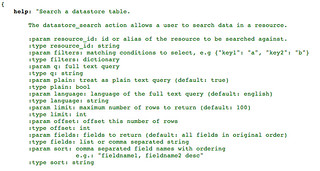 The datastore API returns JSON[/caption]
Let's have a quick look at how you might use the Datastore. The API is described fully in the docs. While its create and update options are good news for publishers, developers will be most interested in the search and query capabilities. The new version of the Datastore uses an underlying PostgreSQL database, which enabled us to build a very powerful API. As described in the documentation, there are three different API endpoints for searching. We'll look at each in turn.
The datastore API returns JSON[/caption]
Let's have a quick look at how you might use the Datastore. The API is described fully in the docs. While its create and update options are good news for publishers, developers will be most interested in the search and query capabilities. The new version of the Datastore uses an underlying PostgreSQL database, which enabled us to build a very powerful API. As described in the documentation, there are three different API endpoints for searching. We'll look at each in turn.
datastore_search_sql endpoint. This allows arbitrary SQL queries on the Datastore. Results are still returned as JSON, which you can easily use in your application. We tried to make the wrapper around the database as thin as possible; as a result, the SQL endpoint gives you full control over your query. You can filter and aggregate data from a resource, or combine it with other resources using joins, as in the example above. Joining and SQL search are the most powerful features of the Datastore for developers who want to work with the data, and we hope people will come up with many uses for them.
datastore_search endpoint. It allows exact matching of certain fields via filters, or searching via the query parameter. The query parameter allows you to use PostgreSQL's full text search, which lets you search across all fields of a resource and returns a ranking of the results. To use full PostgreSQL text search, set the plain parameter to False. This enables queries as described in the PostgreSQL docs. Again, we tried to make the wrapper as thin as we could to give you as much control as possible.
Interested? Check out the documentation on how to get started. And why not use the DataStore API and data from the DataHub at your next hack day? The DataHub is a public CKAN instance - create a group there for your event and upload data in advance.
As usual, please write to the dev list with any questions, and we'll be happy to help.
data.gov.gr now holds 22,000+ datasets from 510+ public bodies, with DCAT-AP metadata, quality scores and harvesting into data.europa.eu
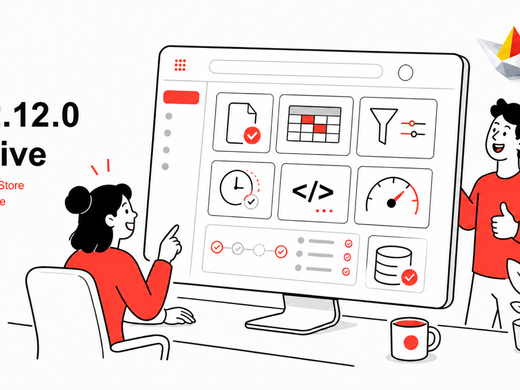
If you run a CKAN portal, 2.12 is the release to pay attention to. Large downloads stop crawling, files become things you can manage in their own right, the interface gets a modern refresh, and older instances get critical security fixes. It's the last 2.x release — and the groundwork for everything 3.0 brings.