CKAN's New Interface: Modern, Accessible, and Ready for the Next Decade of Open Data
CKAN's new interface brings WCAG 2.2 AAA-compliant accessibility, mobile-responsive design, HTMX-powered performance improvements, and a modern design system to the world's leading open data platform. The revamp eliminates technical barriers for smaller organizations while maintaining CKAN's extensive feature set. The update is now in the master branch, with release targeted for 2026 and full integration in CKAN 3.0.
Every organization — regardless of size or budget — can now deploy a professional data portal. The new CKAN user interface eliminates the technical barriers that kept smaller organizations from competing with well-resourced institutions.
The CKAN UI Revamp project has reached a major milestone with the final pull request (#9171) merged into the master branch, completing frontend development. The changes will ship in the next CKAN release.
The problem was simple
Professional data portals required custom development, design resources, and ongoing maintenance. Small organizations couldn't compete. A local health department's data looked less credible than a national agency's — not because the data was worse, but because the interface was dated.
That's fixed.
What we built
A completely redesigned interface with WCAG 2.2 AAA accessibility, mobile-responsive layouts, instant search and filtering, simplified publishing workflows, and better performance at lower infrastructure cost.
It's in master now. It ships in the next CKAN release. Every new deployment gets these improvements automatically — no configuration needed.
The result: A village health clinic in Bangladesh now deploys the same quality portal as the World Health Organization. A university research team shares datasets without hiring designers. An NGO in rural Africa gets a mobile interface that works on low-bandwidth connections.
Same version. Same quality. No compromise.
What’s New
We rebuilt CKAN's interface around a simple question: what makes data portals hard to use, and how do we fix it?
The UI Revamp modernizes CKAN’s default interface across design, usability, accessibility, and performance, while remaining compatible with CKAN’s existing architecture. The focus was not novelty, but clarity, accessibility, and speed — improvements that matter every day for people publishing and using data.
Five Changes That Matter
1. Accessibility Is Built In
We didn't aim for "good enough." We targeted WCAG 2.2 AAA standards and made over 100 specific improvements: better contrast ratios, larger buttons sized for motor impairments, clearer typography using Noto Sans, color palette (Royal Blue #193164, community-selected) tested for color blindness, standardized font sizes across the platform.
What you get: Government agencies meet legal requirements automatically. Researchers with visual impairments navigate independently. Mobile users in bright sunlight can read the interface. No custom work needed.
2. Actually Mobile-Responsive
We modernized the core page layouts that make up CKAN — dataset pages, organization views, user dashboards, admin interfaces. Each of the 10 layouts is now mobile-responsive and follows consistent design patterns.
What you get: View datasets during fieldwork on your phone. Manage users from a tablet in meetings. Browse on any device without fighting the interface.
3. Finding Data Is Faster
Search and filtering used to require full page reloads — slow and frustrating. We integrated HTMX (shout out to Alex Green for the massive work here 👏) so interactions happen instantly. Search for a dataset, filter by tag, refine by organization: no waiting, no loading screens. The new collapsible accordion facets let you explore filters without drowning in options. Dataset browsing has a cleaner interface that makes it easier to scan and compare options.
What you get: Find data faster in catalogs with thousands of datasets. Work efficiently on slower connections. Spend less time waiting, more time analyzing.
4. Publishing Data Is Simpler
If you publish datasets, you'll notice immediately. We reworked the entire data publishing workflow following the CKAN 2.11 release: uploading files is more intuitive, metadata forms are clearer, and the resource creation interface makes sense. The admin dashboard is cleaner with updated controls for managing users, organizations, and datasets. System status and operations are visible at a glance. Tasks that took 10 clicks now take 3.
What you get: Publish your first dataset without training. Upload 100 datasets without memorizing sequences. See system status at a glance. Focus on data, not interface.
5. Performance Costs Less
Behind the scenes, we replaced Bootstrap dependencies with a flexible design system. HTMX implementation reduces full page reloads through partial page updates — improving perceived performance and enabling faster interactions between backend and frontend with optimized asset loading and reduced render times. This matters because it means better performance at lower infrastructure cost, and organizations can customize their CKAN portals without fighting the framework.
What you get: Lower server costs through better efficiency. Fast performance in bandwidth-constrained environments. Easier customization. Better experience without infrastructure upgrades.
The Philosophy Behind the Redesign
There's a fundamental inequality in open data: organizations with money can build beautiful portals. Everyone else gets functional interfaces that undermine their credibility.
The vision was to make CKAN's default interface modern, professional, and accessible out-of-the-box to enable smaller organizations (NGOs, government agencies, research institutions) to deploy professional data portals without extensive customization.
This matters because the quality of your interface affects trust in your data. A researcher looking at public health statistics from a dated, hard-to-navigate portal questions the data's reliability — even when the data is perfectly sound. A journalist trying to access government spending data on their phone gives up if the site doesn't work properly.
We wanted to democratize open data by reducing technical barriers — every CKAN instance should look professional, regardless of organization size.
Automated WCAG audits performed during the design stage
Clarity
Clean, intuitive interface (that was challenging with CKAN's extensive feature set)
Updated navigation, making it easier to find and interact with data
Consistency
Cohesive experience across all pages
Modern visual language
Professional appearance out-of-the-box
Performance
HTMX for lightweight, fast interactions
Optimized rendering and asset loading
Reduced the total cost of ownership through better UI
Who Built This
This was a community effort, coordinated by Alex Gostev who interviewed 37 stakeholders, formed the vision, and drove the two-year project to completion. The taskforce was comprised of personal contributions by willing contributors from the CKAN community. Co-stewards Datopian and Link Digital added additional incentives to contributors so that the value is shared.
The core team:
Alex Gostev (Product Manager at Link Digital): Formed vision of UI Revamp, initiated the project, formed team, drove it to completion
Alex Green (Lead Frontend Developer, independent contributor): HTMX implementation, template rework, component library
Petar Gligorovski (Lead UI/UX Designer, independent contributor): Comprehensive design system with 40+ components
Stephen Oni (Frontend Developer & CKAN Contributor at Datopian): Frontend implementation, UI refinement
Upcoming Release Timeline
Now: Code is in master, undergoing internal testing.
Next: Release in CKAN 2.11.x or 2.12.
2026: Full integration in CKAN 3.0 with demo sites and documentation.
Every new deployment gets these improvements automatically. No configuration required.
CKAN 3.0 targets 2026 availability, building on ongoing enhancements like those discussed at csv;conf in September 2025. Post-release, expect a major announcement, demo sites, and a detailed blog post showcasing the modern UI in action.
Why This Matters
Open data only works if people can access it. A brilliant dataset behind a confusing interface might as well not exist. A mobile user who can't navigate your portal won't find your data. A small organization that can't afford custom development won't deploy at all.
This revamp extends CKAN's mission to the interface itself: making data management accessible to everyone.
The result:
Professional appearance for every deployment, regardless of budget
Faster access for every user, regardless of connection speed
Simpler publishing for every data manager, regardless of technical expertise
Most meaningful improvements don't come from breakthroughs — they come from consistent upgrades to the tools we depend on every day.
This is one of those upgrades.
It will help governments share more openly. Researchers will work more efficiently. Citizens will access information more easily.
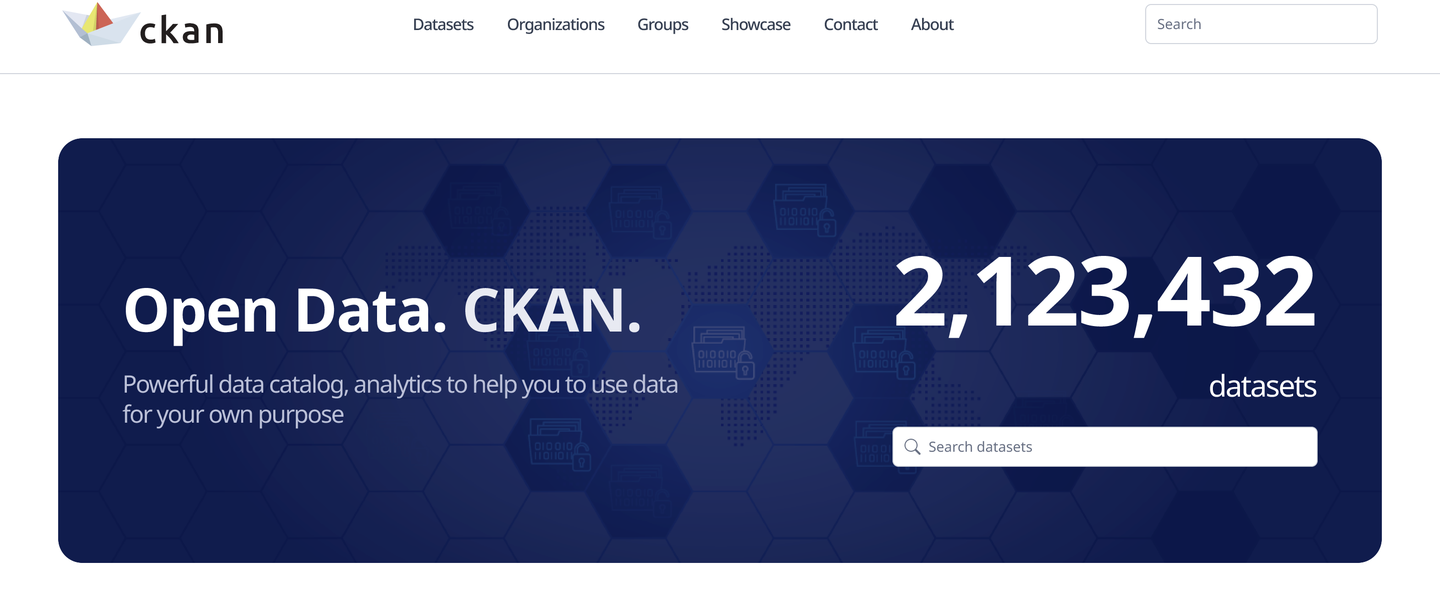
At our February CKAN Monthly Live, we showcased the new UI theme — the result of months of rebuilding CKAN's interface from the ground up. If you want to see what CKAN looks and feels like in 2026, this is the place to start.
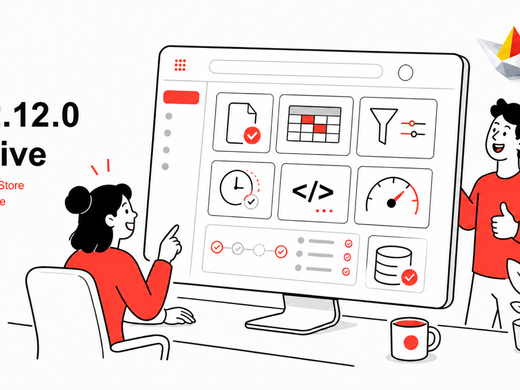
If you run a CKAN portal, 2.12 is the release to pay attention to. Large downloads stop crawling, files become things you can manage in their own right, the interface gets a modern refresh, and older instances get critical security fixes. It's the last 2.x release — and the groundwork for everything 3.0 brings.
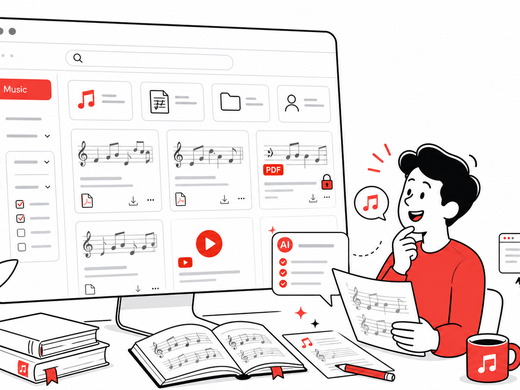
Wolfgang from Ondics built an open source sheet music catalog on CKAN — with AI metadata generation, YouTube playback, and cross-instance sharing. Here's how.