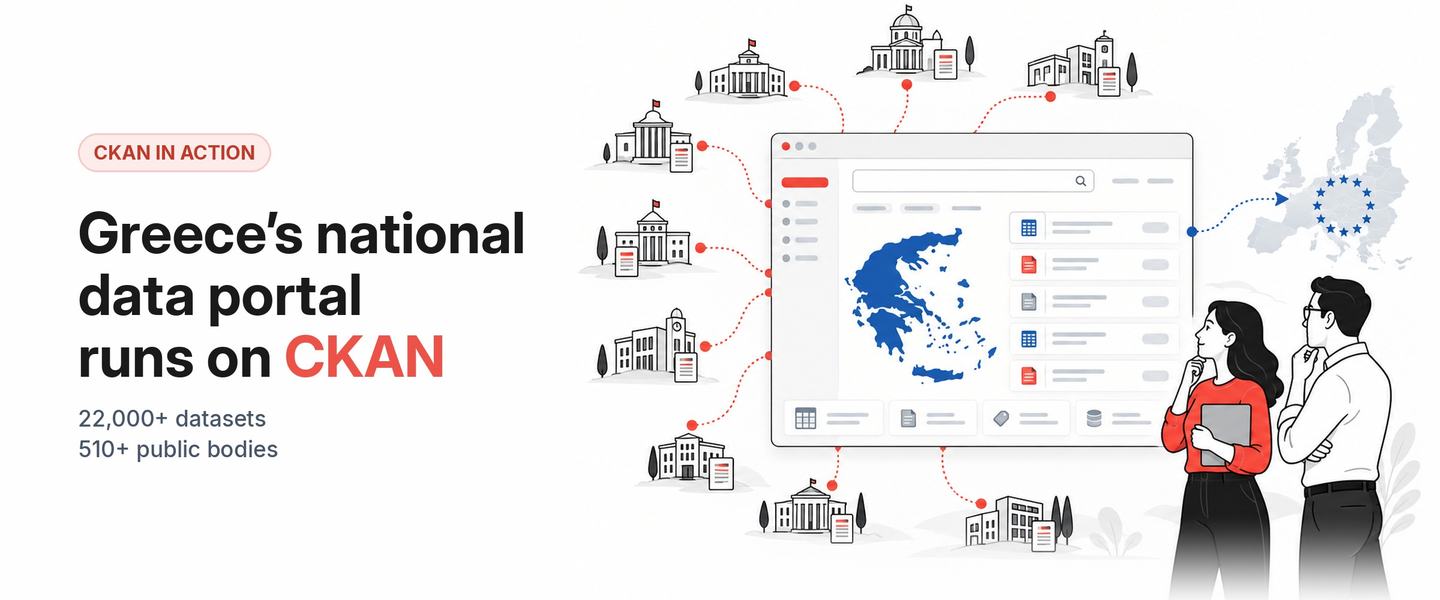
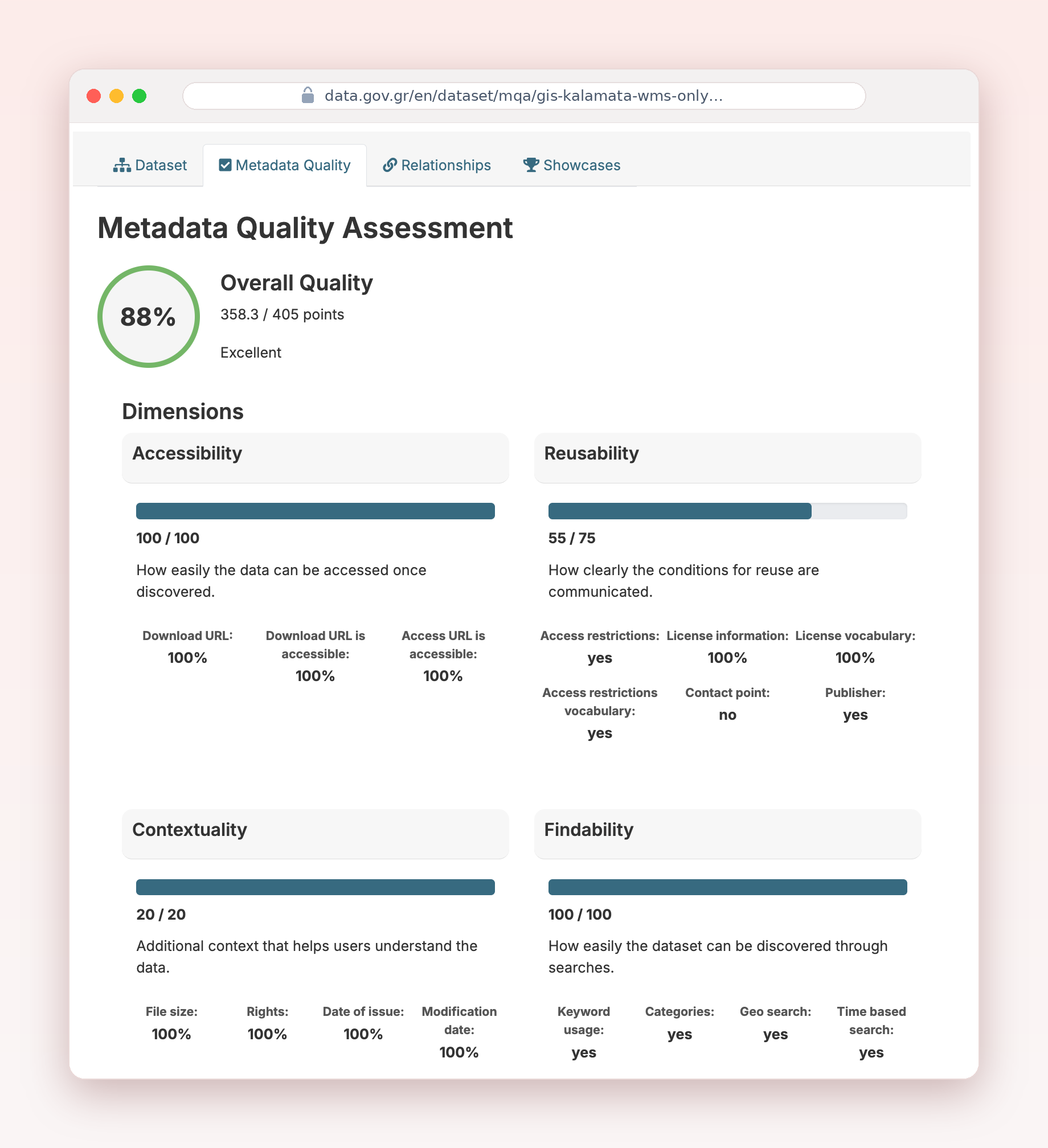
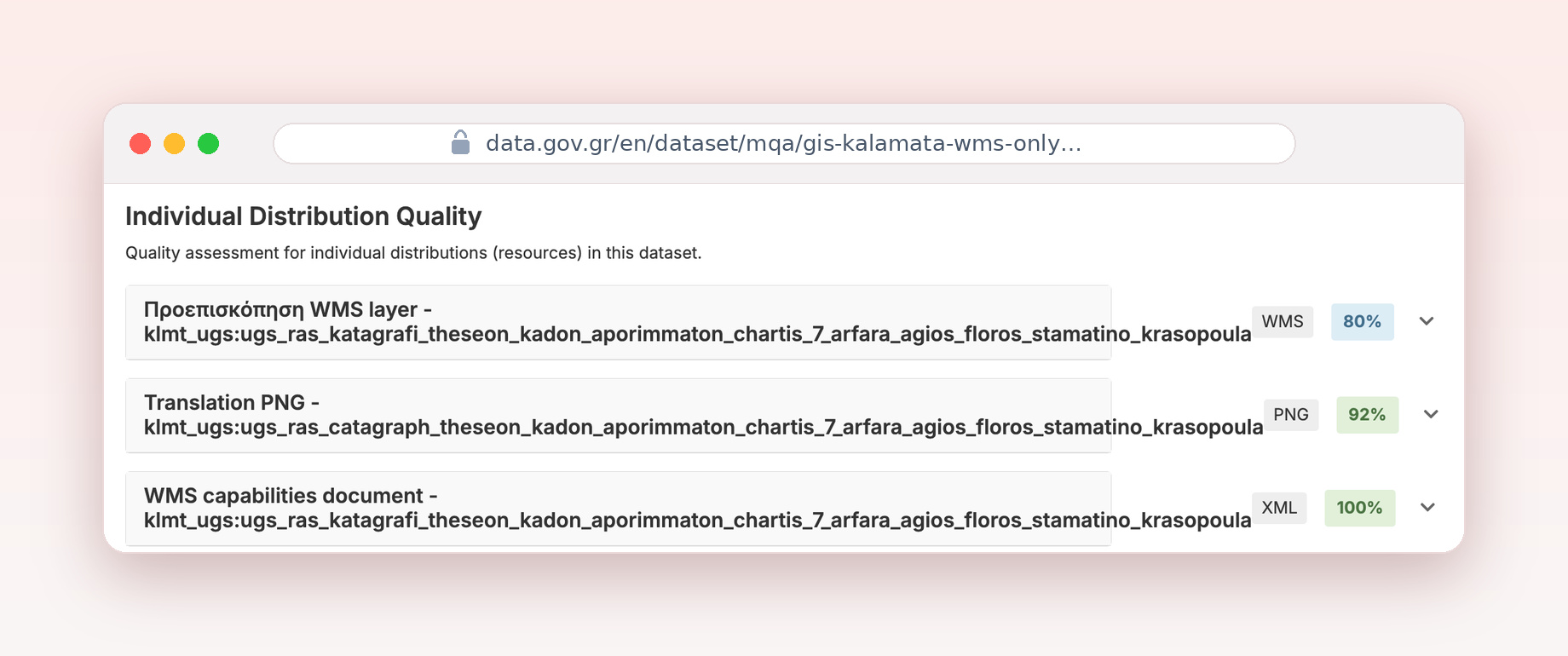
At the launch, the Ministry described the portal as more than a file repository: every dataset is meant to arrive with the information people need to understand and reuse it. Minister Dimitris Papastergiou summed up the moment in four words: "The game starts now."
CKAN
DCAT-AP
Geospatial search
Harvesting
Metadata quality
"Artificial intelligence cannot exist without open data."
Dimitris Papastergiou, Greek Minister of Digital Governance and Artificial Intelligence, at the portal's launch
02
Publishing is now a legal duty
Presenting the new portal at the Ministry, Vasilis Karkatzounis put it plainly: publishing open data "is not a choice, but a legal obligation". The rules back him up.
A 2026 ministerial decision (11654 ΕΞ 2026) sets the operating rules for Greece's Public Open Data Registry, which is data.gov.gr, along with quality and interoperability indicators for the datasets it holds. The same decision links the registry to data.europa.eu. A July 2026 circular on high-value datasets adds that every dataset is registered on data.gov.gr with full metadata.
That circular is Greece's part of an EU-wide obligation. Since June 2024, the EU High-Value Datasets Regulation has required member states to publish six categories of data (geospatial, earth observation and environment, meteorological, statistics, companies and mobility) free of charge, in machine-readable formats and through APIs. Every national portal team in Europe is working to the same rulebook.
Behind the platform sits a 2025 data governance law (5188/2025). It brings the EU Data Governance Act into Greek law, sets a binding five-year national strategy for public-sector data, and provides for a Data Use Officer in public bodies. Portals usually succeed or fail on whether someone inside each organisation owns the data. Greece has written that role into law.
New high-value dataset publishers have already joined, including the Hellenic National Meteorological Service and the Hellenic Cadastre. Their data falls squarely into two of the EU's high-value categories, meteorological and geospatial, and it's exactly the kind that developers, researchers and businesses build on.
High-value datasets
Data governance
Public sector
03
How CKAN portals typically do this
For portal teams planning something similar, every capability above has a well-established route in the CKAN ecosystem:
- DCAT-AP metadata and European harvesting: ckanext-dcat maps CKAN fields to DCAT and DCAT-AP and publishes them in a form other catalogues can harvest.
- Collecting datasets from many publishers: ckanext-harvest, CKAN's framework for scheduled imports from other sources.
- Map-based search: ckanext-spatial adds spatial queries and dataset extent maps.
- Open and restricted data: CKAN's built-in organisations, roles and private datasets.
- Programmatic access: the Action API, which comes with every CKAN portal.
Congratulations to the Ministry of Digital Governance and to Nova ICT, OTS and Crowdpolicy on the launch. We're planning to speak with the team behind data.gov.gr to learn how they put the portal together and what they've learned since launch. We'll share what we find in a follow-up article.